
Premium Environmental Solutions Pvt. Ltd.
Industrial wastewater systems

Effluent Treatment Plant (ETP)

Advanced Effluent Treatment Solutions for Industrial Wastewater

Our ETPs are designed to treat industrial wastewater generated from manufacturing and processing operations. We provide customized solutions based on wastewater characteristics, industry requirements, treatment objectives, available space and applicable environmental standards.

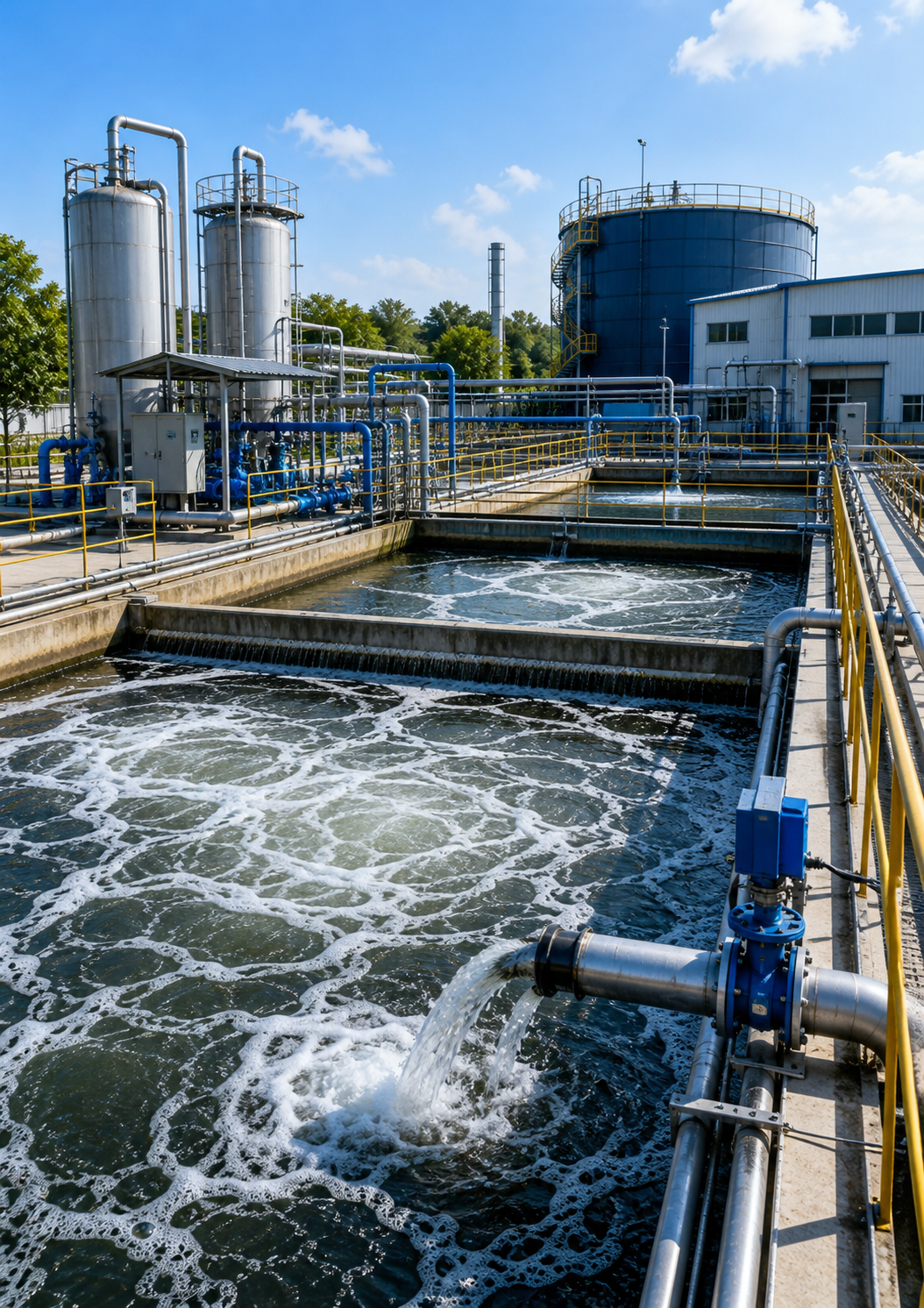
Industrial effluent treatment plant with process tanks, pipework and aeration basins

Characterize · Treat · Recover

Industrial effluent, engineered around the actual wastewater.

What is an ETP?

Treatment built around the pollutant profile.

An Effluent Treatment Plant is a wastewater-treatment system designed specifically for treating industrial effluent before its reuse, discharge to an authorized facility, or further treatment.

An effectively designed ETP can help industries reduce pollutants, improve water quality and enable treated-water reuse wherever technically and legally appropriate.

Suspended solids

Physical solids requiring separation

Organic pollutants

Biodegradable load requiring treatment

COD / BOD

Organic and oxidizable load indicators

Oil & grease

Separation and pretreatment considerations

Colour

A pollutant characteristic requiring appropriate removal

TDS

Dissolved-solids treatment consideration

Heavy metals

May require precipitation or specialized treatment

Chemicals

Process compatibility and chemistry matter

Nutrients

Treatment objective for the specific effluent

Difficult-to-treat compounds

May require advanced or specialized treatment

Design principle: The treatment process is selected according to the actual characteristics of the wastewater rather than using a single standard configuration.
Seven treatment approaches

Types of ETP We Provide

ETP technologies can be combined according to wastewater characteristics, treatment objectives, available space and required treated-water quality.

01

Physico-Chemical ETP

Physico-chemical treatment uses processes such as coagulation, flocculation, pH correction and clarification to remove suspended and chemically precipitable pollutants.

Key information
  • Effective suspended-solids removal
  • Helps remove certain metals and colour
  • Flexible process configuration
  • Suitable as pretreatment for biological or advanced treatment

Applications / design note

Engineering industries · Metal-finishing units · Chemical industries · Textile industries · Manufacturing facilities

02

Biological ETP

Biological treatment uses microorganisms to reduce biodegradable organic pollutants in industrial wastewater.

Included biological processes
  • Activated Sludge Process
  • MBBR
  • SBR
  • Extended Aeration
  • Other specialized biological processes

Applications / design note

Suitable for industries generating biodegradable organic wastewater.

03

MBBR-Based ETP

Moving Bed Biofilm Reactor (MBBR) uses floating bio-media to provide a surface for microbial growth.

Key information
  • Compact design
  • High biological treatment efficiency
  • Flexible process configuration
  • Suitable for variable wastewater loads
  • Can be combined with physico-chemical and tertiary treatment

Treatment role

A configurable stage within an industrial wastewater treatment train.

04

SBR-Based ETP

Sequencing Batch Reactor (SBR) performs biological treatment and settling in controlled cycles.

Key information
  • Compact process arrangement
  • Automated treatment cycles
  • Effective organic-load reduction
  • Suitable for applications requiring consistent treated-water quality

Treatment role

A configurable stage within an industrial wastewater treatment train.

05

Tertiary Treatment ETP

Tertiary treatment is used when additional polishing of treated effluent is required.

Key information
  • Pressure Sand Filter
  • Activated Carbon Filter
  • Micron Filtration
  • UV Disinfection
  • Ozonation
  • Membrane filtration
  • Other advanced polishing systems

Applications / design note

The appropriate treatment train depends on the required final water quality.

06

RO-Based Effluent Treatment System

Reverse Osmosis can be integrated into an ETP where reduction of dissolved salts and recovery of water is required.

Key information
  • Industrial water recovery
  • Process-water reuse
  • High-TDS wastewater treatment
  • Water conservation projects

Applications / design note

RO is considered for high dissolved-solids streams subject to suitable pretreatment and concentrate management.

07

Zero Liquid Discharge (ZLD) System

For projects requiring Zero Liquid Discharge, the ETP can be integrated with advanced recovery and evaporation systems.

Key information
  • ETP → Filtration → RO
  • Concentrate management
  • Evaporation / crystallization
  • Maximum practical water recovery

Applications / design note

ZLD design must be based on wastewater chemistry, recovery targets, energy requirements and concentrate characteristics.

The engineering treatment train

ETP treatment process

A typical ETP may include the following stages. Not every ETP requires all of them; the final configuration is selected after evaluating wastewater characteristics and required treated-water quality.

01

Collection & Screening

02

Equalization

03

pH Correction

04

Coagulation & Flocculation

05

Primary Clarification

06

Biological Treatment

07

Secondary Clarification

08

Tertiary Filtration

09

Advanced Treatment / RO if required

10

Disinfection / Reuse / Authorized Disposal

Wastewater intelligence

Key ETP design parameters

Our ETP solutions can be engineered around parameters that define capacity, pollutant load, compatibility and treatment requirements.

01

Flow Rate

Determines plant capacity

02

pH

Determines chemical and biological treatment requirements

03

BOD

Indicates biodegradable organic load

04

COD

Indicates overall oxidizable organic load

05

TSS

Determines solids-removal requirements

06

TDS

Determines dissolved-solids treatment requirements

07

Oil & Grease

Determines separation/pretreatment requirements

08

Colour

Determines appropriate colour-removal process

09

Heavy Metals

Determines precipitation or specialized treatment

10

Temperature

Influences biological and physical treatment

11

Specific Chemicals

Determines process compatibility

Industries we serve

Industrial treatment for varied effluent profiles

We design ETP solutions for a wide range of industrial applications, with process selection based on the actual wastewater.

Textile & Dyeing

Pharmaceutical

Chemical

Food & Beverage

Dairy

Distillery

Electroplating

Metal & Engineering

Automobile

Paint & Chemical Processing

Paper & Pulp

Tanneries

Oil & Lubricant Processing

Manufacturing Industries

CPCB maintains industry-specific effluent standards covering sectors such as chemicals, pharmaceuticals, dyes, petrochemicals, paints and oil refineries. Required treatment and final effluent quality should be determined according to applicable industry-specific requirements and consent conditions.

Water reuse & recovery

Treat · Recover · Reuse · Reduce environmental impact

A properly designed ETP can help industries reduce freshwater consumption by treating wastewater for suitable reuse applications.

Depending on the required quality, treated water may potentially be reused for approved non-potable applications. CPCB guidance for certain industries emphasizes exhausting suitable reuse options before environmental discharge where applicable.

Industrial effluent
Treatment
Recovery
Cooling towersGardening and landscapingFloor washingProcess applicationsUtility operationsToilet flushingOther approved non-potable applications
RO & ZLD integration

Advanced recovery when the project requires it.

RO can be integrated into an ETP where reduction of dissolved salts and recovery of water is required, subject to suitable pretreatment and concentrate management.

For projects requiring Zero Liquid Discharge, ZLD design must be based on wastewater chemistry, recovery targets, energy requirements and concentrate characteristics.

Typical ZLD configuration

1ETP
2Filtration
3RO
4Concentrate Management
5Evaporation / Crystallization
6Maximum Practical Water Recovery
Compliance-focused design

Trustworthy engineering starts with the applicable conditions.

ETP performance should be evaluated against the applicable environmental standards and Consent to Operate conditions issued by the relevant Pollution Control Board.

CPCB also maintains online monitoring / OCEMS resources for industrial emissions and effluent monitoring. Treatment decisions remain tied to the wastewater, industry requirements and applicable conditions.

Project-specific evaluation

Standards, consent conditions and monitoring requirements inform the final design.

Applicable environmental standards
Pollution Control Board conditions
Industry-specific requirements
Effluent monitoring resources
Our ETP approach

From wastewater characterization to long-term operation.

Every industrial effluent is different. We develop the treatment process according to wastewater analysis, flow rate, pollutant load, treatment objectives, available space and applicable discharge or reuse requirements.

01

Wastewater Characterization

02

Process Selection

03

ETP Design

04

Installation

05

Commissioning

06

Performance Monitoring

07

Operation & Maintenance

Why choose our ETP solutions

Customized treatment, built for the real process.

Our capabilities support industrial wastewater projects from treatment selection through reuse, monitoring and operation.

Customized treatment design
Industry-specific process selection
Compact and space-efficient configurations
Automated process control options
Energy-conscious design
Treated-water reuse solutions
RO and ZLD integration where required
Sludge-management considerations
Operation and maintenance support
Scalable solutions for future requirements

Need a Water Treatment System for Your Facility?

Talk to our engineering team about your flow rate, water quality and treatment requirements.